Smart agriculture means running a farm with connected technology: drones, GNSS auto-steering, IoT sensors, robotics and AI software, all pointed at the same job of doing fieldwork more precisely, more efficiently and more autonomously.
On this page
The old way treats a field as one uniform block. The new way treats it as a collection of zones, each with its own needs. Soil sensors flag where water is short. Drones catch disease while it is still patchy. Auto-steering tractors plant rows that run centimetre-straight. The payoff is easy to state: more food from less labor, less input and less waste — and it compounds, because every completed job adds data that makes the next prescription sharper.
What does smart agriculture include?
Four building blocks cover most of what gets labelled smart agriculture. In practice, almost every product you will be quoted falls into one of these layers:
| Layer | What it does | Typical equipment |
|---|---|---|
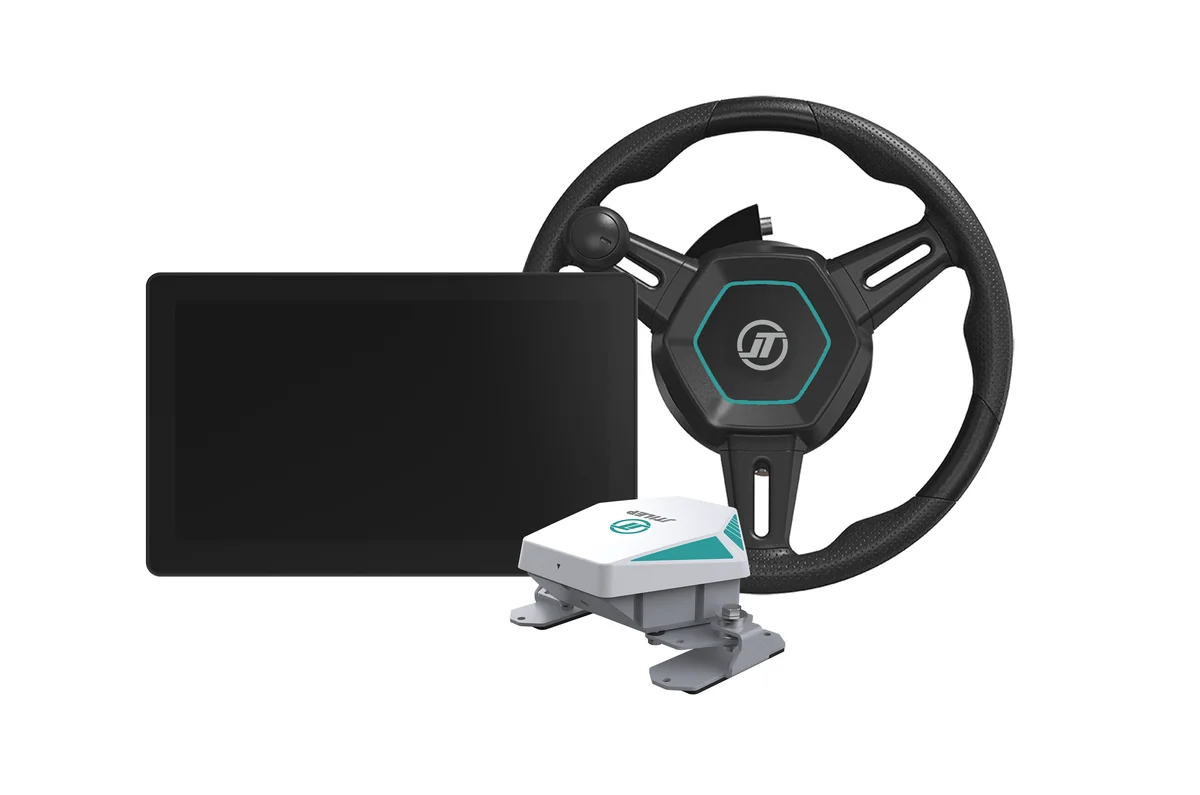
| Precision positioning | Centimetre-level fieldwork — tillage, seeding, fertilising, spraying | Tractor auto-steering (GNSS + RTK) |
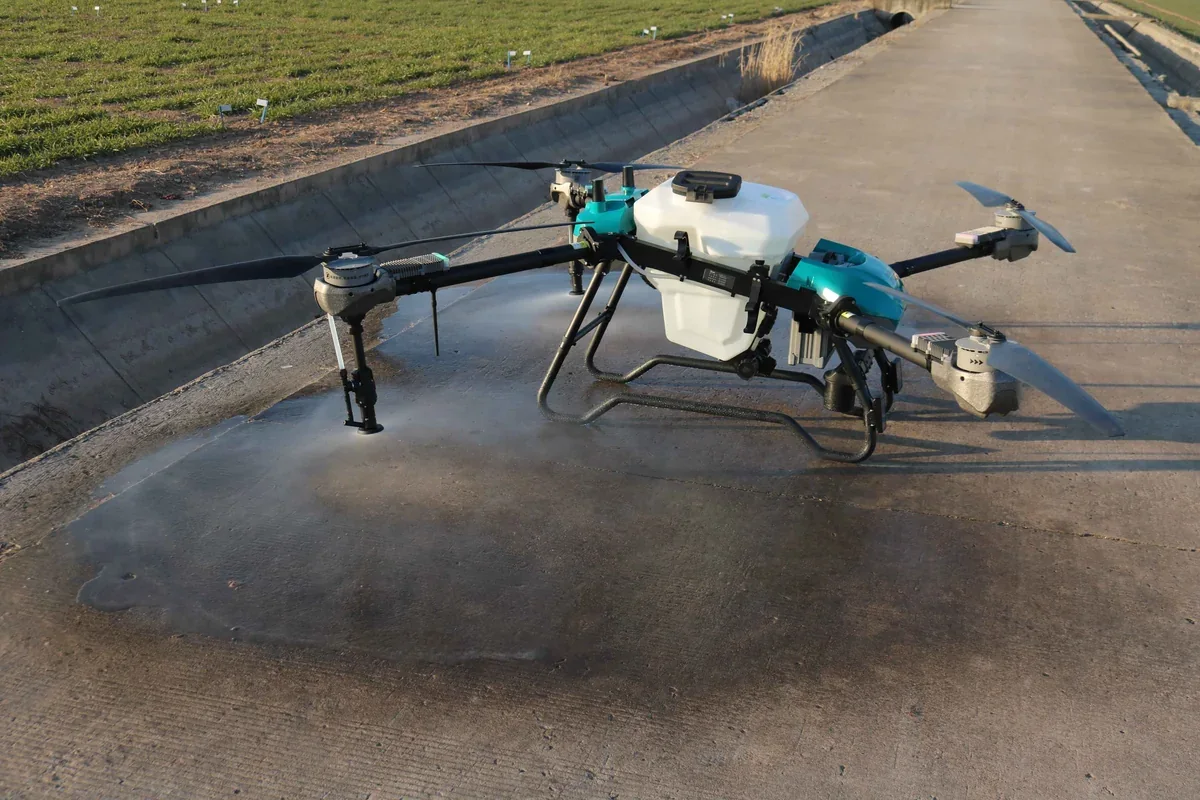
| Aerial sensing & application | Spraying, spreading, mapping, crop scouting | Agricultural drones |
| Ground sensing | Real-time soil, weather and crop data | IoT sensors, weather stations |
| AI decision layer | Prescription maps, forecasting, scheduling | Farm management platforms, cloud algorithms |
If you are buying hardware today, the first two layers are where the returns arrive fastest — they replace labour and input directly, rather than merely reporting on it.
How does it work?
Data moves through three layers — sensing, analysis, execution — and then loops back on itself:
- Sensing. Drone multispectral scans and soil sensors collect data across the field.
- Analysis. The platform turns that data into a prescription map: where nutrients are short, where disease is starting.
- Execution. Auto-steering tractors apply inputs precisely; drones apply variable rates only where they are needed.
- Verification. Job data flows back in, so the next prescription is more accurate than the last.
The loop keeps feeding itself. That is why early adopters describe the improvement as compounding rather than linear — the hundredth hectare is worked better than the first, using the same machines.
What does it cost and what is the payback?
Budgeting is the part most buyers ask about first, and the honest answer is that it depends on scale. Rather than staring at a sticker price, work backwards from one pain point:
| Investment | What you get | Payback logic |
|---|---|---|
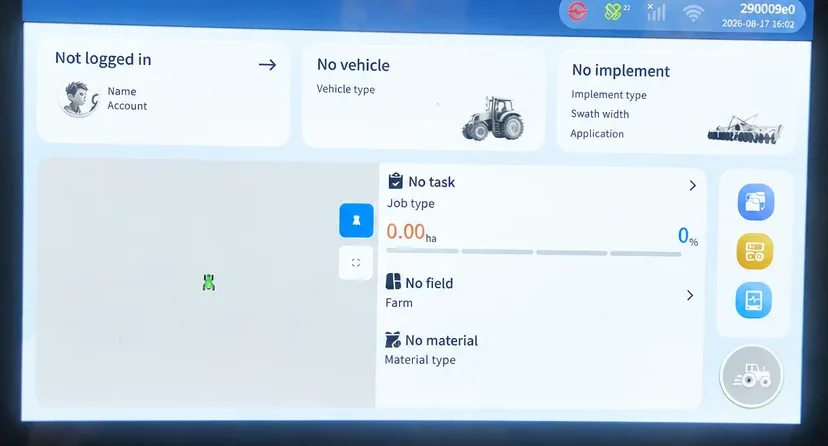
| Tractor auto-steering | Centimetre-level passes across tillage, seeding, fertilising and harvest | Less overlap and less skip — seed, fuel and fertiliser savings start in the first season |
| Crop protection drone | Roughly 3 hectares covered per sortie, day or night | One operator covers far more ground; spraying no longer waits on field conditions |
| Sensors & IoT | Soil moisture, weather and crop data in real time | Targeted irrigation and input timing cut water and chemical use |
| Management software | Prescription maps and job records | Decisions move from memory and habit to data |
If weeding labour is your bottleneck, an auto-steering kit tends to pay for itself in the first season. If spraying coverage is the bottleneck, a drone does. Start with the pain point, not the equipment list.
The numbers behind the shift
Published research puts the scale of the transition in context:
- The global smart agriculture market is estimated at roughly $23 billion in 2026, growing at an 11–13.5% CAGR (Value Market Research).
- The agricultural robot market is growing at a 22–25% CAGR, with drones the single largest segment at about 46.5% share (Fortune Business Insights / TBRC).
- USDA research found precision agriculture lifts fertiliser use efficiency by 15% or more, with savings of up to 20% in some regions.
- The FAO projects global food demand requiring roughly 60% more production by 2050 — a gap that will have to close against a shrinking agricultural workforce.
From assisted driving to autonomous fleets
There is a useful way to read the market: automation arrives in three stages, and only the first two are buyable today. Xuzhou Jitian Intelligent — an agricultural equipment manufacturer founded in 2008 and exporting to 30+ countries — follows exactly this path:
| Stage | Technical state | Machinery |
|---|---|---|
| Assisted driving | Auto-steering with centimetre-level RTK — shipping today | HD818 tractor auto-steering (BeiDou + GPS + GLONASS + Galileo) |
| Autonomous work | Unmanned single-machine operation — shipping today | JT-80 agricultural drone (70 L spray / 100 L spread, 150 kg take-off) |
| Fully unmanned | Air-ground robot fleets with autonomous decision-making — in development | Agricultural robots (vision + laser sensing) |
What this means for emerging markets
Where the technology lands first depends heavily on labour economics and field geometry:
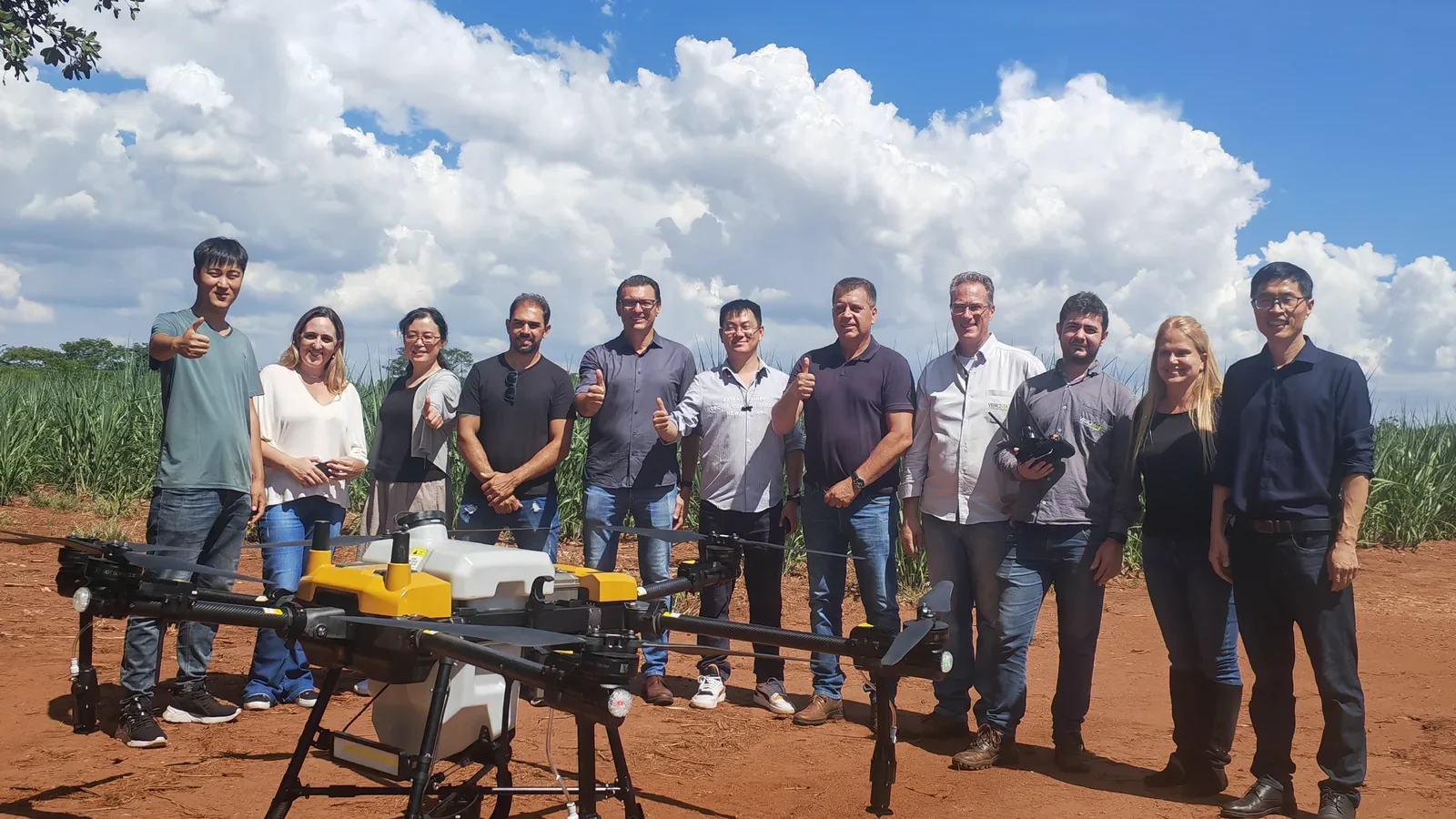
- Latin America — Brazil and Argentina are soybean export giants where auto-steering's cost-per-hectare savings are a hard commercial requirement, not a nice-to-have.
- Southeast Asia — smaller fields and mixed crops reward compact, adaptable machines. Drone crop protection is close to essential given labour shortages and monsoon-timing pressure.
- Sourcing reality — certification and export documentation decide whether a machine can legally enter your market at all. Ask for the document set for your country before discussing price.
Frequently asked questions
Is smart agriculture worth it for small farms?
Yes, if you start narrow. Pick a single pain point — weeding labour or fertiliser waste — and address only that. Precision navigation and drone crop protection both scale down to small acreage, and both are available at a minimum order quantity of one unit for a trial.
Smart agriculture vs precision farming: what is the difference?
Precision farming is a method — applying inputs precisely where they are needed. Smart agriculture is the wider system that contains it: precision farming plus IoT sensing, robotics and the data platform that ties them together. Precision farming is a subset of smart agriculture.
What is the biggest barrier to adoption?
Upfront investment and operator training, in that order. The mitigation is the same for both: start with one machine, prove the return on your own fields in one season, and expand with evidence rather than optimism.
Looking for a smart agriculture partner?
Jitian Intelligent supplies the air-ground execution layer: HD818 auto-steering on the ground and JT-80 drones in the air, both from the same plant and the same document set.